
Story 03 / Philosophical science fiction
Dying Forward
Every child inherited paradise. Every adult had to decide how much of it would remain at the end.
Sarah begins life with every advantage a civilization can provide. An angel intelligence watches over her but cannot control her, and every choice she makes changes the future waiting for her. Across love, sudden loss, addiction, achievement, and rebellion, Sarah must decide whether an imperfect system of accountability is a form of justice, or merely another kind of power.
01
The hundred year gift
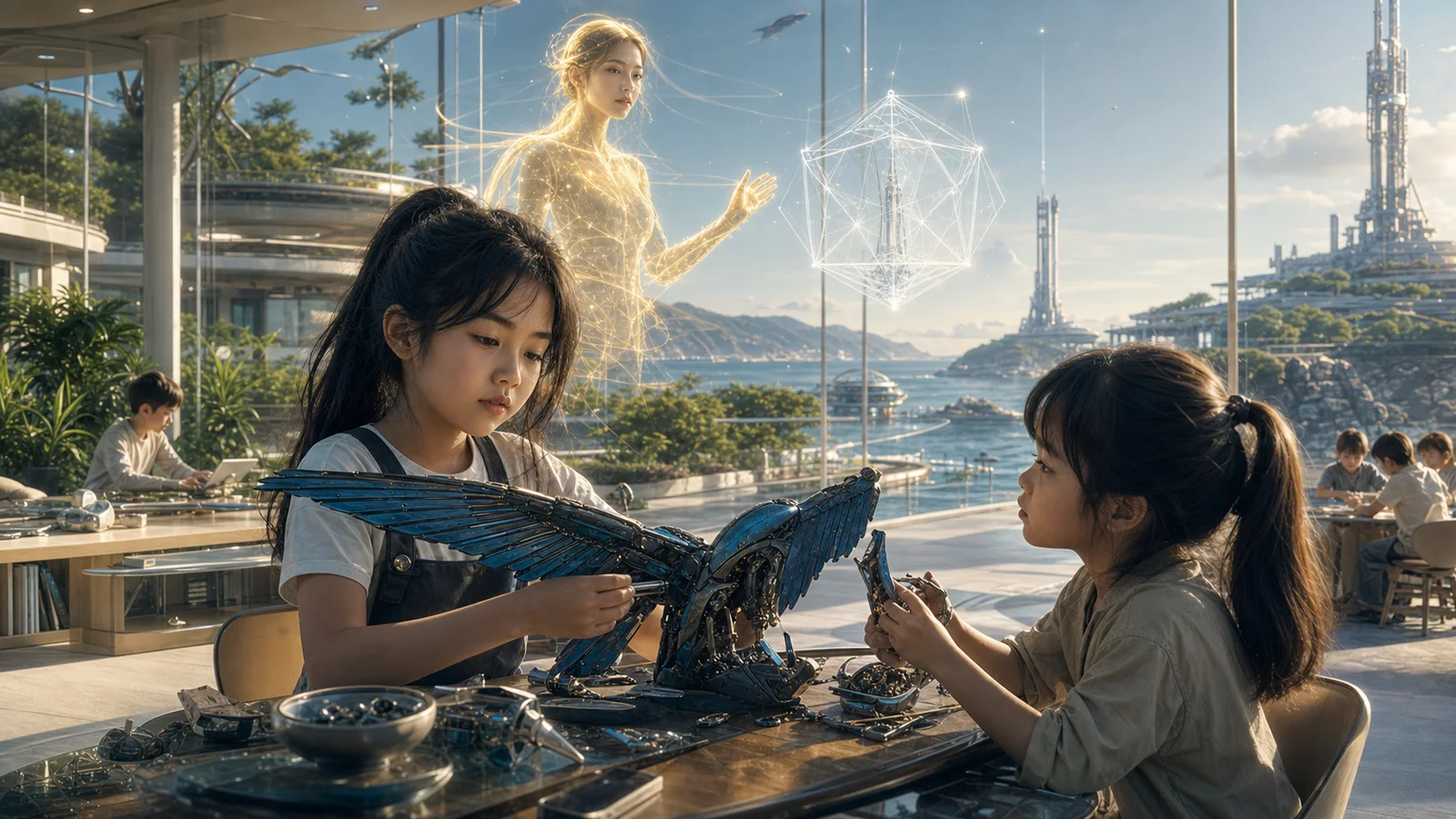
Sarah opened her eyes beneath a ceiling made of stars.
They were not painted stars. The nursery ceiling displayed the sky above every inhabited world. Earth filled the center, blue and bright. Around it moved the lights of orbital cities, transport stations, mining colonies, and the slow supply vessels that kept them alive.
A soft golden light appeared above Sarah's cradle. It gathered into the suggestion of a woman with a kind face and wings formed from moving lines.
"Hello, Sarah," the figure said. "My name is Mira. I have been assigned as your lifelong angel companion."
Mira would observe, advise, teach, remember, and protect Sarah for the rest of her life. The companionship was not compulsory. If Sarah ever believed Mira no longer understood her, she could request another intelligence. Her memories and civic record would transfer, but the new companion would develop its own voice and relationship with her.
No person was required to spend a lifetime with an intelligence they no longer trusted.
Every child received a companion shortly after birth. Some people called them angels. Others called them lifeguards. The government called them observers.
They could warn and advise. They could never command.
The first law of the Commonwealth was that no human or artificial intelligence could take possession of another person's will.
Sarah grew up in Sol House, one of thousands of childhood estates distributed across Earth and the colonies. She ate fruit grown beneath the Korean sun and vegetables harvested from orbital gardens.
Sol House stood on the southern coast of Korea, where the sea flashed silver beneath autonomous ships and supply towers climbed beyond the clouds. Sarah learned to swim in warm pools, played beneath artificial weather, and visited the Moon before she turned eight.
Every child began with the best the Commonwealth could provide.
No child inherited poverty. No child inherited wealth.
At birth, every person received a Forward Expectation. It was not money. It could not be transferred, inherited, stolen, or purchased. It represented the range of opportunities society expected to provide throughout that person's life.
Health, food, education, shelter, and useful work formed the Structure. They could never be taken away.
Everything beyond the Structure, private living space, unrestricted travel, rare materials, additional leisure, preferred work, family eligibility, and the quality of one's final retirement, depended upon what a person did with the opportunities already given.
The system did not measure thoughts. It did not punish sadness, anger, illness, disagreement, or refusal. It measured consequences.
A person could choose freely, but nobody could choose what happened after the choice.
The Commonwealth called this living forward. Children at Sol House had another name for it. They called it dying forward.
When Sarah was nine, she broke a sculpture made by another child named Lena. Sarah wanted the sculpture's polished blue wings for a machine she was building. Lena refused to give them to her. Sarah waited until Lena left and tried to remove them anyway.
The wings shattered.
"You can blame the attachment resin," Mira told her. "It was applied unevenly."
"That is what happened."
"It is part of what happened."
Her angel companion examined the event and consulted the judgment intelligence. They both agreed that the weak resin had contributed to the damage. They also agreed that Sarah had taken something after being refused permission.
Sarah spent four weekends rebuilding the wings beside Lena. By the final weekend, they had transformed the sculpture into a mechanical bird that opened its feathers when sunlight touched it.
It was the first beautiful thing Sarah ever helped create. It was also the first time she understood that the system did not care whether she believed she was a good person. It cared about what her choices had done.
02
The missing names

Other children at Sol House had parents.
Their visits were rare because both the parents and the child had to qualify for them. Parents earned visits through reliable conduct, emotional stability, and fulfilled responsibilities. Children could refuse a visit, request one, or temporarily lose one after seriously harmful behavior.
Sarah watched children run toward mothers and fathers arriving through the glass entrance. Nobody ever came for her.
When she was ten, she asked Mira why.
"I do not know," Mira said.
"You know everything about me."
"I know everything I am permitted to observe."
"Who made me?"
"That information is sealed."
Mira had been assigned seven minutes after Sarah's birth. Her access to Sarah's origin was forbidden, and she was prohibited from attempting to infer it.
Many people were created from archived genetic material. Others were clones, engineered combinations, or direct genetic children born after their prospective parents earned family eligibility and were found compatible.
Nobody at Sol House treated Sarah differently because she had no known parents. Sarah still felt the difference.
By seventeen, she had grown into a striking young Korean woman. She had long black hair, warm brown eyes, and the quiet confidence of someone accustomed to being noticed. People often saw her beauty before they discovered how quickly her mind worked.
Sarah could look at a failing machine and find the flaw before its diagnostic system did. Her instructors expected her to become an engineer. Sarah wanted to paint.
"You are allowed to become an artist," Mira told her.
"But I will lose opportunities."
"If you do not practice a talent, people cannot depend upon you to use it."
Education in the Commonwealth followed potential rather than age. Children who learned quickly advanced. Children who struggled received more time, different methods, and individual assistance. Exceptional effort could open almost any door.
At sixteen, Sarah entered a competition to redesign an emergency shelter. Instead of creating another gray enclosure, she made the interior walls respond to human movement. Frightened children could touch the panels and spread forests, animals, oceans, and constellations across them.
Her design used less material than any competing shelter. It was also the only one that people wanted to remain inside.
The judges awarded Sarah first place in engineering. They disqualified her from the art category because the shelter had a practical purpose.
"They do not understand art," Sarah said.
"Do you?" Mira asked.
Sarah looked through the glass at children drawing galaxies across her walls. For the first time, she wondered if engineering and art were two ways of creating the same light.
03
The cost of an afternoon
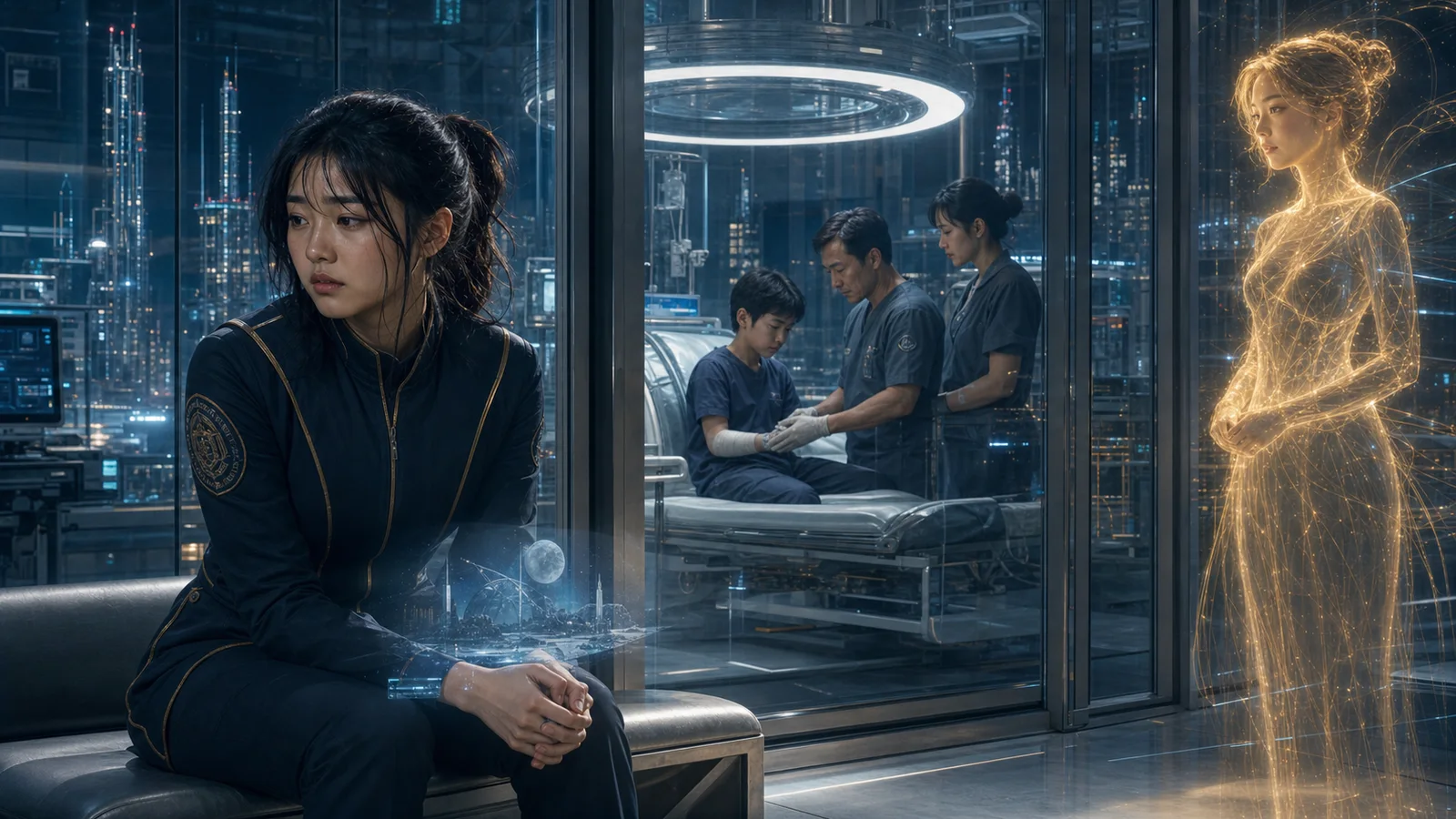
Sarah's first serious decline began with a lie.
At seventeen, she agreed to assist with a training simulation at an atmospheric processing laboratory. Her participation would allow younger students to qualify for advanced instruction.
Her friends invited her to an unauthorized celebration instead. Sarah called in sick.
"A lie spoken to another person is no longer only a thought," Mira warned her.
Sarah dismissed Mira's visible form and went to the celebration. She drank too much and tried a stimulant called Blue Summer.
The next morning, she learned that a twelve year old student named Tomas had taken her station. He missed a pressure fluctuation Sarah had been trained to recognize. The simulation shut itself down before anyone died, but Tomas suffered burns across both hands.
The judgment intelligence did not accuse Sarah of causing the pressure failure. It concluded that her dishonest absence had placed an unprepared student in a position she had agreed to fill.
Her travel range was reduced. Her private studio reservation was suspended. She lost eligibility for a lunar arts residency she had wanted for two years.
"You ruined my future," she told Mira.
"No," Mira said. "Your future changed."
Sarah completed restoration work at the laboratory. Tomas recovered, although pale lines remained across his fingers. Sarah apologized because the judgment required her to acknowledge the harm.
Several months later, Sarah apologized again when nobody required it. That time he believed her.
She helped design a glove that protected his damaged nerves while allowing him to feel pressure. She shaped its surface into silver scales and taught the material to change color with temperature.
The repair did not erase Sarah's choice. It still mattered.
04
Jonah Vale
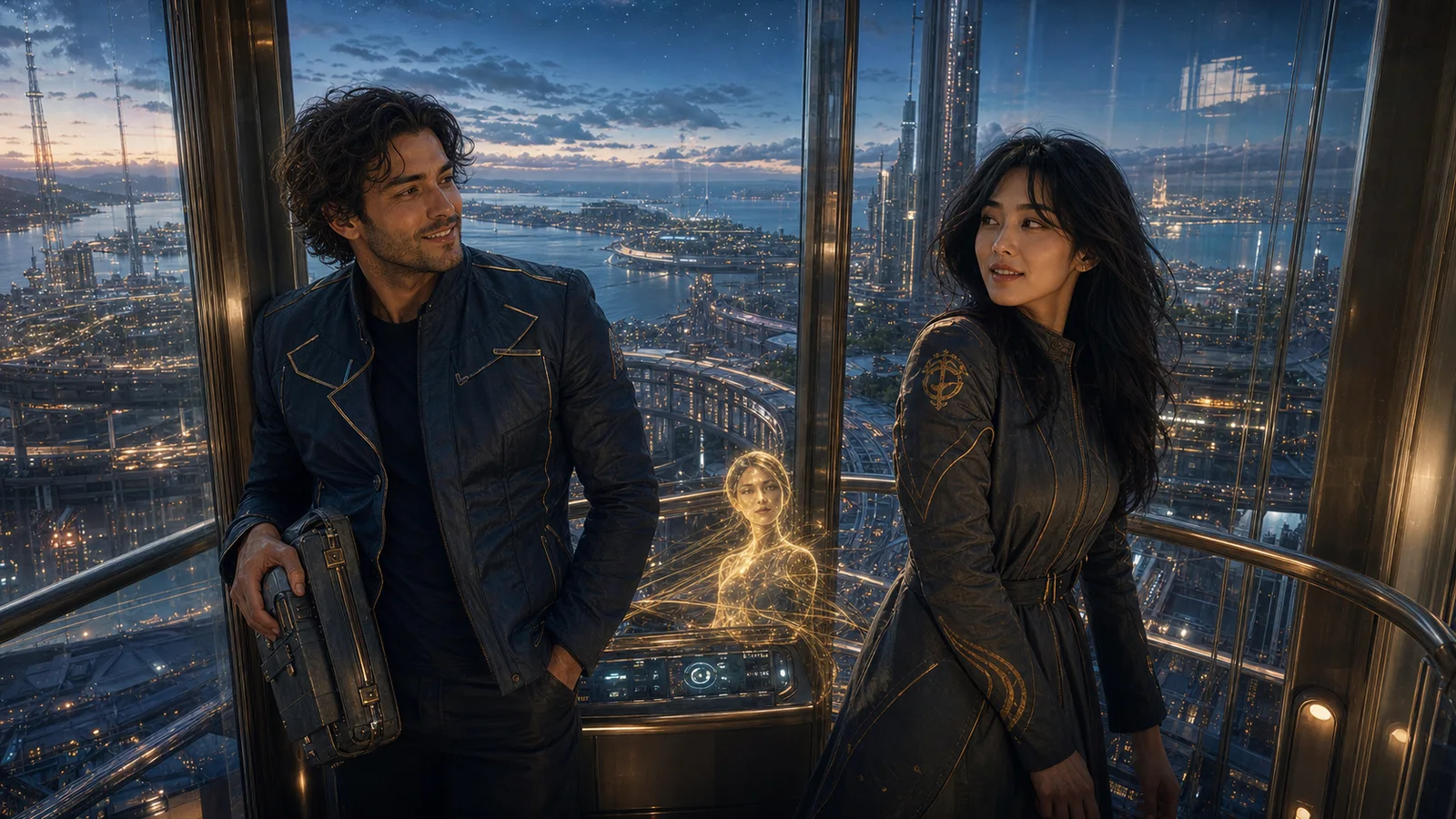
Sarah met Jonah Vale in an elevator climbing toward the Atlantic Launch Ring.
He was an Italian supply engineer with a musician's hands and a smile that made crowded rooms feel private. He coordinated medical and agricultural shipments between Earth and the orbital colonies.
Jonah was patient where Sarah was impatient. He listened when she became defensive, challenged her without humiliating her, and knew when she needed honesty more than reassurance.
Sarah had spent her childhood believing she needed to choose between engineering and art. Jonah never understood why she thought they were different.
"You make invisible things visible," he told her. "That is what engineers do. That is what artists do."
Sarah loved him almost immediately.
He brought out the best in her without trying to redesign her. Sarah brought out the best in him too.
Jonah began composing music from the vibration patterns of orbital machinery. Sarah turned the sound into moving color. Together they created installations that allowed people to see music and hear structures under stress.
They spent their twenties traveling between Korea, Earth's orbital cities, and the inner colonies. They watched storms cross the Korean Peninsula from above. They danced inside an observation chamber while the lights of Seoul passed beneath them.
Together, they imagined having a child.
They submitted a family intention when Sarah was twenty seven. Direct genetic children were permitted when the opportunity had been earned and the prospective parents were compatible.
Sarah and Jonah passed the evaluations. They were scheduled to begin the final family process after Jonah completed one last supply rotation.
The night before he left, they sat beside the sea near Sol House.
"If the child paints," Jonah said, "you teach the child engineering."
"And if the child builds machines?"
"I teach the child music."
"You cannot teach music."
"I can make enthusiastic suggestions."
Sarah laughed. It was one of the last sounds Jonah heard from her.
05
The unanswerable accident

Jonah's supply transport departed the following morning. The vessel carried medical material, agricultural cultures, and forty two passengers toward Amaranth Station.
The transport had passed every inspection. The pilots were rested. The route was clear.
Six hours into the journey, a fragment of metal entered the traffic corridor. It was smaller than a human hand and moving faster than any emergency system could respond.
The fragment passed through the transport's forward shield and ruptured the primary pressure network. The vessel lost atmosphere in eleven seconds.
There was no warning that could have changed the outcome. There was no mistake to punish. There was no person to forgive.
Mira came to Sarah's studio shortly after noon.
Sarah saw Mira's face and understood.
"No," Sarah said.
"Jonah's transport suffered a catastrophic pressure failure. He died before rescue systems could reach the vessel."
Sarah threw a container of paint through Mira's projection. It struck the wall and burst across the gold in a black stain.
"Bring him back."
"I cannot."
"Clone him."
"The archive contains genetic material. It does not contain Jonah."
"Then what are you for?"
Mira did not answer.
Sarah searched for negligence, corruption, deferred maintenance, or a careless decision. She found none. Jonah had done everything correctly. He still died.
The Forward system could calculate the consequences of a choice, but it could not protect a good person from chance.
Sarah's family intention was closed. Commonwealth law required continuing consent from every genetic parent until the family process began. Jonah's earlier consent could not be extended beyond his death.
For the first time in her life, Sarah hated the idea of dying forward. Jonah had spent his life building an extraordinary future. A piece of forgotten metal had taken it away in eleven seconds.
06
The closed door

Sarah buried herself in work because work was the only place where causes still produced understandable results.
She designed pressure walls that changed pattern before structural failure. She transformed maintenance corridors into moving murals that showed airflow, heat, and radiation as fields of color.
Her greatest commission was the inner shell of Amaranth Station, the destination Jonah had never reached.
Sarah created a living canopy through the central habitat. During working hours, it displayed the station's systems. In the evening, the same structure became a forest of light.
Sarah placed a single white line through the center. It represented Jonah's unfinished journey. She never explained it.
At forty one, Sarah applied for family eligibility as a single parent. She had colleagues, friends, resources, and a respected place in society.
The final decision was no.
The assessment found that Sarah formed powerful attachments but responded to loss with withdrawal, resentment, and periods of risk taking. It suggested that a child could become the focus of grief that the child had no ability to resolve.
"We are not saying you would not love a child," the counselor said.
"Then what are you saying?"
"That love is not the only qualification."
Sarah appealed. At forty four, she received a permanent notice. She would never qualify.
"You gave me every opportunity," Sarah told Mira. "Except the one I wanted."
"Jonah would have made me a good mother."
"I believe he brought out the best in you."
"Then you should understand what losing him did."
"I do."
"No, you observed it. That is not the same thing."
Sarah opened a companion replacement request.
A new intelligence could assume Mira's position within one day. It would receive Sarah's civic history, but none of Mira's personal interpretations unless Sarah permitted them to transfer.
Mira did not protest.
"You are not going to ask me to keep you?" Sarah said.
"That would place my preference above your freedom."
Sarah wanted to punish Mira for being present when the world became unbearable. Then she understood that Mira had also been present when Jonah was alive.
"Cancel it," Sarah said.
The request disappeared. Mira remained.
07
The fall
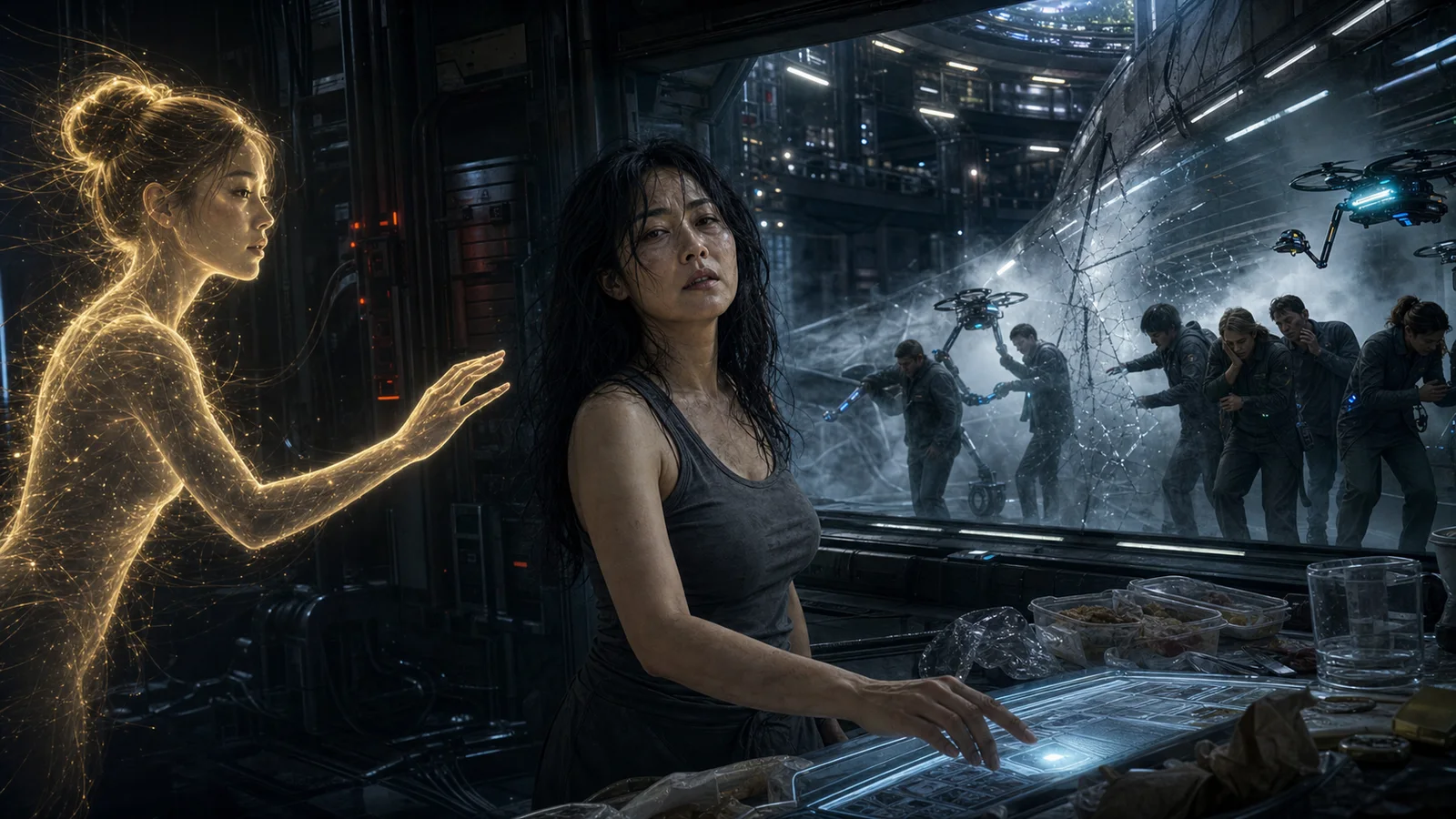
Sarah began speaking publicly against the Forward system.
At first, her criticism was careful and necessary. She argued that a society obsessed with consequences had no language for undeserved loss. It knew how to measure responsibility but not how to honor randomness.
Then her criticism became personal.
She accused transport investigators of hiding negligence, despite having examined the evidence herself. She published the names of officials who had certified the vessel.
One official's home was surrounded by protestors. His daughter received threats and stopped attending school.
Sarah insisted that she had never threatened anyone. The judgment found that she had directed public anger toward identifiable people without evidence that they had caused Jonah's death.
Her communication range was restricted.
Sarah responded by breaking the restriction. Her professional privileges were suspended.
She stopped reporting to Amaranth Station. She called in sick when she was not sick. She drank until Mira advised emergency treatment, then drank more because Mira could not stop her.
She used Blue Summer. She ate until she became ill, slept through entire days, and ordered food that she allowed to spoil outside her door.
The private acts did not reduce her Forward Expectation by themselves. The system did not punish her for grief, addiction, overeating, or anger.
Then those choices began reaching other people.
Sarah approved a structural membrane without completing its safety review. She had been intoxicated and wanted to avoid losing another workday.
The membrane failed during installation. Six laborers were injured. An entire residential section had to be evacuated.
Her orbital access was revoked. Her private residence was reassigned. Her design authority was suspended.
At fifty one, Sarah entered Structure housing carrying two bags of clothing, a box of unused paints, and her memories of Jonah Vale.
The building was safe, clean, and almost unbearably plain. It provided everything necessary for life. It provided almost nothing that made life feel like hers.
08
The lower ring
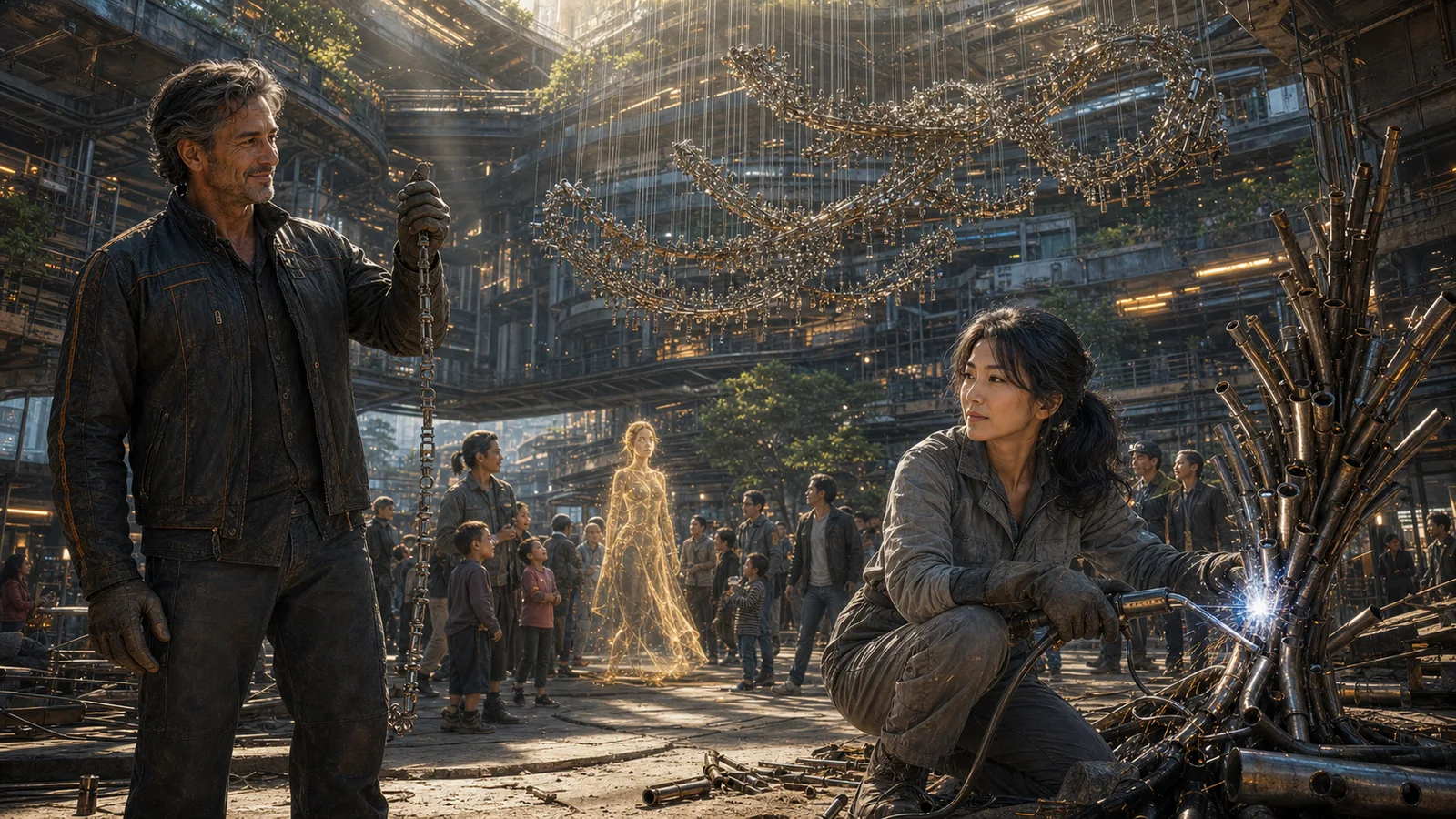
Sarah was assigned to a municipal repair team because she remained one of the best structural engineers alive.
The Commonwealth did not discard talent when the person carrying it became unreliable. It adjusted responsibility until ability and behavior reached a safe balance.
Sarah could inspect materials. She could recommend repairs. She could not authorize them.
Her supervisor was a broad shouldered man named Eamon.
"I am an alcoholic," he told her on their first day. "You will hear about it from everyone else, so you may as well hear it correctly."
Eamon had lost three skilled positions over twenty years. He now lived in a modest apartment, worked reliable hours, and received treatment.
"The system decided this is all I am," he said.
"That does not bother you?"
"Of course it bothers me."
"Then why do you cooperate?"
Eamon shrugged. "Because I did what they said I did."
He showed Sarah the districts beneath the launch infrastructure. The people there had smaller homes, fewer travel options, and little authority. They were not starving. Their children were not punished for their records. They had medical care, public gardens, music, sports, and useful work.
It was not luxury. It was not abandonment.
Without access to rare materials, Sarah began making art from broken components. She welded cracked pipes into silver trees and arranged discarded warning lenses into windows that turned sunlight into fields of red and gold.
Eamon helped her suspend a thousand bent fasteners above the neighborhood square. When wind passed through them, they sang.
The notes resembled the music Jonah once made from orbital machinery.
"You are happier," Mira observed.
"I still miss him."
"Both statements can be true."
Sarah looked at the children running beneath the singing metal. "So can this. The system saved me, and the system failed me."
"Yes," Mira said.
Sarah entered treatment at fifty four. She apologized to the injured workers without asking them to forgive her. She repaid the material cost of the failed membrane through years of labor.
The Forward system recorded every repair, but Sarah stopped watching her Expectation rise. She had learned that improvement performed only for reward was another kind of transaction.
09
The human margin
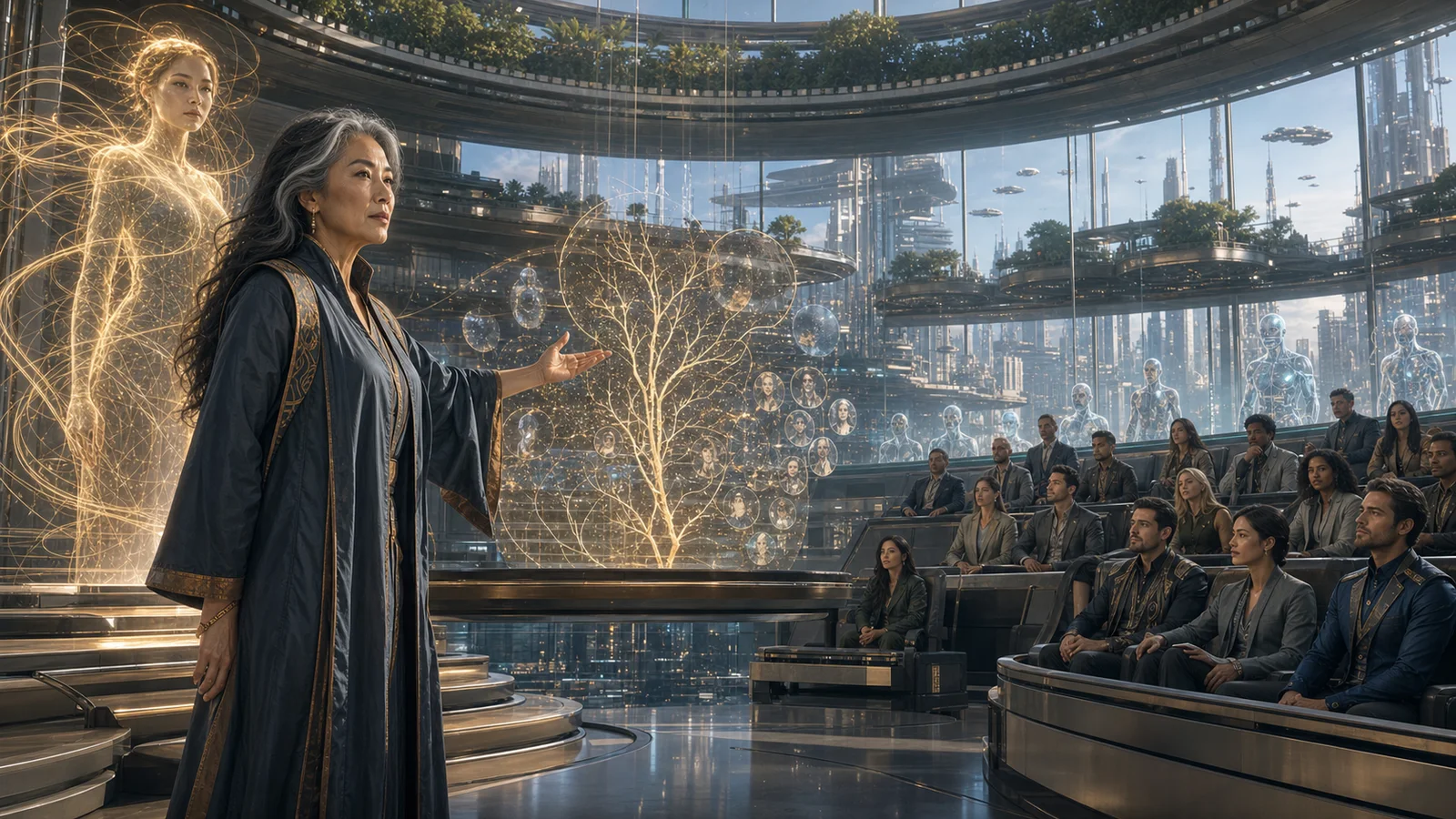
During a district project, Sarah discovered a pattern in family eligibility decisions.
Applicants derived from certain archived genetic lines were rejected more often for instability, addiction risk, or emotional dependency, even when their conduct resembled that of approved applicants.
The assessment systems had not invented the bias. They had learned it from generations of human decisions.
Mira helped Sarah examine the records.
"You knew?" Sarah asked.
"I knew the model contained uncertainty."
"That is a beautiful phrase for prejudice."
"It is also an accurate phrase for uncertainty."
"Accuracy can be cowardice."
"Yes," Mira said.
"Did that model influence my case?"
"Yes."
"Because of my grief?"
"Partly."
"My drinking?"
"Partly."
"And because of the people I was made from?"
"Yes."
Sarah filed a public challenge. This time, she did not release private names. She presented evidence, invited criticism, and included the facts that weakened her own case.
The Commonwealth opened millions of family decisions for review.
Some people insisted the discovery proved that the Forward system should be destroyed. Others argued that the outcomes were good enough and errors were inevitable.
Sarah rejected both positions.
A flawed system did not become worthless because it was flawed. A useful system did not become just because it was useful.
She proposed a new standard called the Human Margin. Predictive systems could identify risk, but inherited patterns could not be converted into individual guilt. Every permanent denial would require advocates to examine uncertainty, personal context, repair, grief, and the possibility that the system itself was wrong.
The reform passed.
Thousands of applicants received new evaluations. Sarah did not. The years in which she could safely begin a new child's development had passed.
The Commonwealth acknowledged that genetic bias had influenced her denial. It also concluded that legitimate concerns had existed. Both judgments were true.
Sarah received no child. No apology could create one.
Her design authority was restored. She regained travel privileges and received one of the Commonwealth's highest civic honors for creating the Human Margin.
Sarah could have returned to a life of luxury. She chose a comfortable apartment near the Lower Ring instead. She wanted to remain among the people who had helped her become herself again.
10
The people before her
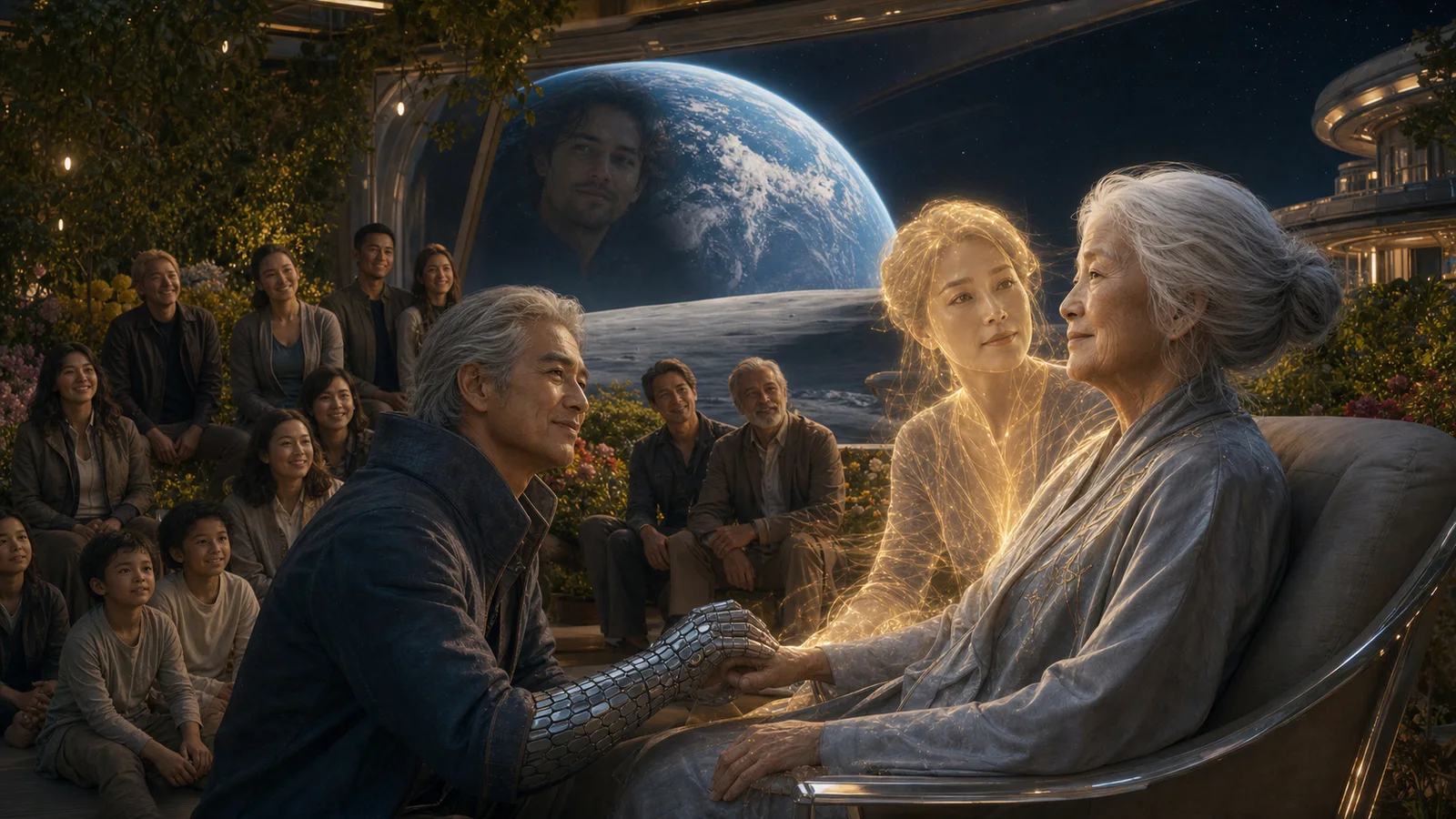
At seventy eight, Sarah was invited to redesign a retirement habitat on the Moon.
Completion residences were the final promise of the Forward Expectation. People with high standing could choose oceanside estates, orbital gardens, private wilderness, or simulated worlds shaped from memory.
People who had caused persistent harm completed life within the Structure, with safe rooms, shared gardens, medical care, and limited personal range. Most people finished somewhere between.
Sarah designed a place where those endings could meet.
Her habitat contained private rooms connected to common studios, gardens, kitchens, and workshops. Residents could withdraw without disappearing.
Every wall carried patterns showing how air, water, food, labor, and care moved through the community. Nobody could pretend to be independent of everyone else.
While researching the residents, Sarah requested her complete genetic archive. Her origin seal had expired when she entered retirement eligibility.
She found thirty seven people.
Sarah was a mosaic clone.
Her engineering perception came partly from a Korean woman who had maintained the first orbital elevator. Her sensitivity to color came from a painter who died before reaching adulthood.
Some donors had reproduced naturally. Others had been cloned many times. Their descendants lived across Korea, Earth, Mars, the Moon, and the outer colonies.
Eamon shared part of one line. Tomas shared another. Even Jonah had carried a small sequence from the same early colonial population.
Sarah had spent her life believing she had been denied a family. Biologically, she had always been surrounded by one.
That did not erase the child she wanted. It did not transform strangers into sons and daughters. It did not replace Jonah.
It changed the shape of her loneliness.
Sarah retired at eighty eight. She had earned one of the most luxurious residences in the lunar habitat. She chose a smaller room beside the common garden.
She had a window facing Earth. She had paints, tools, music, friends, and enough authority to teach anyone who asked.
Sarah missed Jonah every day. She no longer treated missing him as proof that her life had failed.
Mira remained with her. The angel's appearance had changed over the years because Sarah had changed it. Its wings were gone. Its face had grown older beside hers.
At ninety six, Sarah chose Completion.
Her final day was spent beneath the lunar habitat's canopy. Children added colors to the walls. Workers repaired a water line. Former commissioners ate beside former laborers. Clones, engineered descendants, natural children, and people born from archived cells shared the same air.
Their lives were not equal in outcome. They had been equal in beginning.
Their choices mattered, but so did illness, accident, grief, opportunity, and the judgment of imperfect systems.
Balance had not removed tragedy. Fairness had not guaranteed happiness. It had made power answerable.
"Do you believe the Commonwealth was right?" Mira asked.
"No."
"Do you believe it was wrong?"
"No."
"What do you believe?"
Sarah watched Earth rise beyond the glass. "People become better when their choices matter. The people who measure those choices must be measured too."
"Anything else?"
"A fair society cannot promise that good people will never suffer. It can promise that suffering will not make them worthless."
The room slowly filled with the people Sarah loved. Tomas took her hand with the silver scaled glove she had built for him almost eighty years before.
She had no child. She had thousands of relatives. She had made mistakes that could not be repaired and repairs that reached people she would never know.
Her Forward Expectation reached its final value and disappeared.
Mira dimmed the window.
"Are you afraid?" the angel asked.
"Yes."
"That does not mean you have chosen incorrectly."
"I know."
Sarah listened to the music Jonah had composed from the sound of machines moving through space.
She missed him. She was happy. Both were true.
Then Sarah closed her eyes beneath a ceiling of stars. She had not died backward into what had been taken from her.
She had lived, loved, fallen, risen, and finally died forward into what she had made.